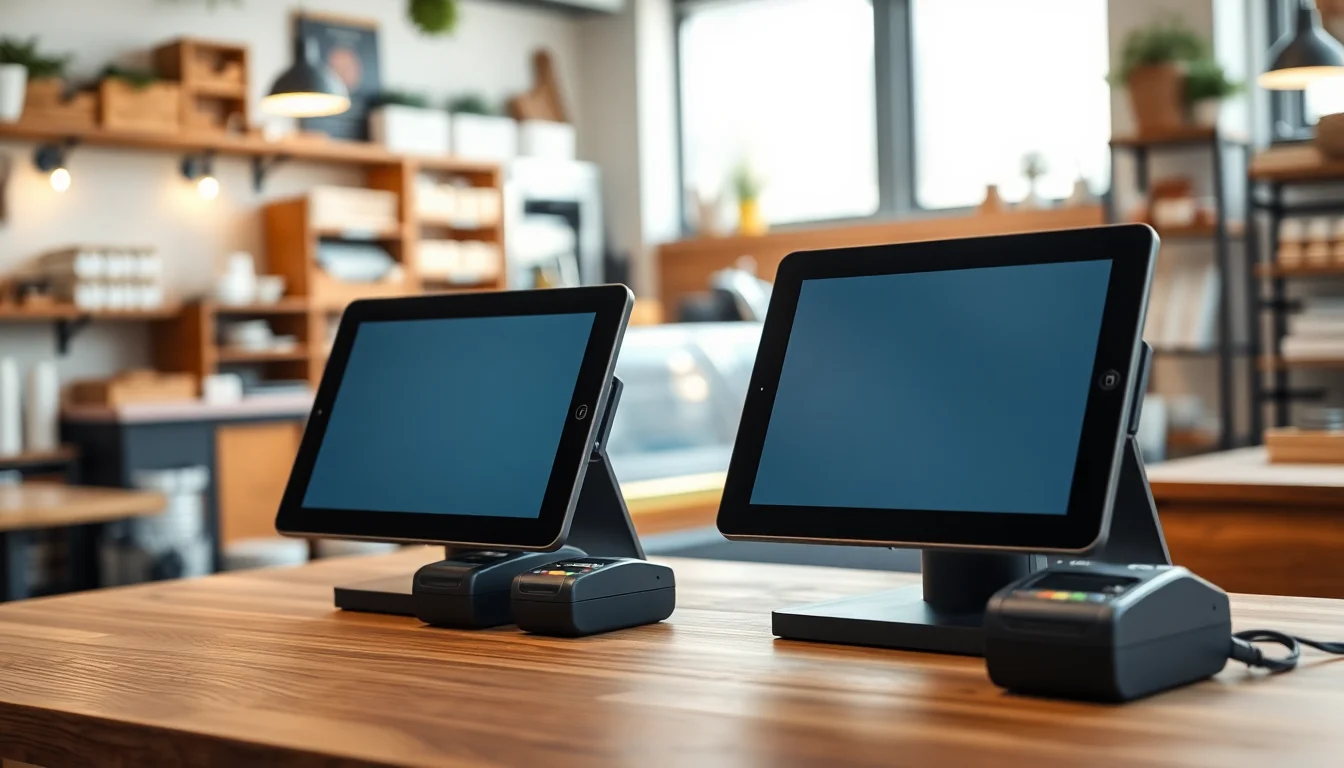
Square vs Toast: Which POS Wins for Your Restaurant in 2025?
If you’ve never bought a point-of-sale system before — think of it as the combination of the cash register, the receipt printer, and the software that tracks every sale and runs your end-of-day reports — the number of options out there can feel genuinely overwhelming. Two names come up in almost every restaurant owner’s research: Square and Toast. Both are full-stack POS platforms, meaning they sell you the physical hardware (the screen your server taps), the software that runs on it, and a built-in payment processor that moves money to your bank account. The goal of this article is simple: by the time you finish reading, you’ll know exactly which one to choose for your specific situation, with the math to back it up.
If you’re already mid-LOI or reviewing a Toast contract right now, skip to the scenario verdicts at the bottom. Everyone else, let’s walk through this together.
Pricing: What You Actually Pay Per Month
Both platforms have a free or near-free entry tier, and both bury their real cost in processing fees. Here’s the honest picture as of early 2026:
Square for Restaurants
- Free plan: $0/month software, 2.6% + $0.10 per card-present transaction
- Plus plan: $69/month per location, same processing rate
- Premium (custom): negotiated rates for $250k+/year GMV (gross merchandise volume — total sales before expenses)
Toast
- Starter: $0/month software (Pay-as-you-go), but processing jumps to 3.09% + $0.15 per transaction
- Point of Sale plan: $69/month, processing drops to 2.49% + $0.15
- Build Your Own: starts around $110/month with the most flexibility
According to NerdWallet’s comparison of Toast vs Square, the gap between Toast’s Starter processing rate and its paid-plan rate is one of the most important numbers to evaluate before choosing a tier, because the difference compounds quickly at real restaurant volumes.
By the Numbers: Processing fee reality check at $30,000/month in card sales
| Platform & Plan | Monthly Software | Est. Processing Cost | True Monthly Cost |
|---|---|---|---|
| Square Free | $0 | $790 (2.6% + $0.10 × ~1,500 txns) | $790 |
| Square Plus | $69 | $790 | $859 |
| Toast Starter | $0 | $942 (3.09% + $0.15 × ~1,500 txns) | $942 |
| Toast POS $69 plan | $69 | $762 (2.49% + $0.15 × ~1,500 txns) | $831 |
At $30k/month, Square Free and Toast’s $69 plan are nearly identical in true cost. But watch what happens when you scale to $80k/month: Toast’s 2.49% starts saving you real money if you’re on the paid plan, while Square’s flat 2.6% compounds. Use the Processing Fee widget on this site to run your own GMV through both rate structures before you sign anything.
Fit Small Business’s Toast POS review notes that Toast’s Pay-as-you-go hardware financing model is where many owners get caught: you are effectively paying for the hardware through elevated processing rates over time rather than owning it outright from day one. Operators who can afford the upfront hardware purchase will almost always come out ahead over a two-year horizon when you run the math on the rate differential.
Hardware: What You Own vs. What You’re Locked Into
This is where Square and Toast diverge most sharply, and it’s the clause that will quietly cost you money if you switch platforms in year three.
Square hardware runs on standard Android and iPad infrastructure. The Square Terminal (available on Amazon) is a self-contained unit at roughly $299 that processes payments without needing a separate tablet. The Square Stand for iPad (on Amazon) runs about $149 and turns an existing iPad into a full POS station. Because the underlying hardware is standard iOS or Android, you can repurpose a Square Stand’s iPad for something else if you ever leave Square. You own the hardware. You paid for it. It’s yours.
Toast hardware is purpose-built and Android-based but locked exclusively to Toast’s ecosystem. The Toast Flex is available purchased outright or at $0 upfront through the Pay-as-you-go financing model — which, as noted above, you pay for through higher processing rates over the contract term. Here’s the important part: Toast hardware cannot run any other POS software. If you switch to a competitor in year two, every Toast terminal becomes unusable for any other platform. That’s a real switching cost most owners don’t factor into their initial budget.
PCMag’s review of Toast POS (pcmag.com, “Toast POS Review”) addresses this hardware lock-in directly, describing Toast’s proprietary terminal ecosystem as a long-term commitment that operators should weigh carefully before signing — particularly those who are uncertain whether they will remain on the platform for the full contract term. For operators who want to preserve optionality, Square’s open hardware model is a structural advantage — your physical investment doesn’t expire if you change your mind.
Hardware Comparison Block
Square Terminal
- Key specs: Built-in printer, 5.5” touchscreen, WiFi + Ethernet, no tablet required
- Verdict: Best all-in-one for food trucks and counter service
- Amazon listing
Square Stand (iPad-compatible)
- Key specs: Mounts standard iPad (6th gen+), contactless + chip reader built in, swivel for customer-facing
- Verdict: Best for table-service restaurants already holding iPads
- Amazon listing
Toast Flex
- Key specs: 10.1” Android display, fanless design, customer-facing display option, kitchen display integration
- Verdict: Best performance for high-volume full-service restaurants — if you’re committed to Toast long-term
- Purchase direct through Toast’s sales team; pricing and configurations are quoted individually and not listed publicly
Restaurant-Specific Features: Where Toast Earns Its Premium
Square has made significant investments in restaurant features over the last two years — table management, course firing, and a revamped kitchen display system (KDS) integration are all now available on the Plus plan. For quick-service restaurants, food trucks, and simple counter-service operations, Square is genuinely competitive with anything on the market.
But for full-service restaurants (FSR) — the kind where you have sections, servers with their own ticket queues, split checks, and a kitchen that needs course-by-course communication — Toast still has a meaningful edge. Specifically:
- Floor plan management in Toast is more intuitive and handles mid-meal table transfers without the workarounds Square sometimes requires
- Toast’s Kitchen Display System has tighter latency and customizable routing; a well-set-up Toast kitchen genuinely fires faster
- Labor management and tip pooling are built into Toast at the plan level; Square charges add-on fees for comparable payroll and scheduling features
- Loyalty and online ordering are both available on both platforms, but Toast’s integrations tend to be tighter for FSR workflows
Fit Small Business’s Toast POS review specifically calls out the KDS routing and floor management tools as the features that most justify Toast’s higher cost for full-service operators, while noting that simpler concepts are likely overpaying for capabilities they won’t use.
The tradeoff: Toast requires a multi-year contract in most configurations — typically 2 years, sometimes 3. NerdWallet’s comparison of Toast vs Square flags this prominently. Early termination fees exist, and they’re not trivial. If you’re signing a Toast contract right now, ask the sales rep to write in an explicit exit clause at the 12-month mark if business conditions change. Some reps will negotiate this; many won’t volunteer it.
Square has no long-term contract. Month-to-month on all plans. You can cancel by Tuesday if you decide to, with no penalty. For a first-time restaurant owner or anyone with meaningful uncertainty in their business model, that flexibility has real monetary value.
Scenario Verdicts: If X, Then Y
Here’s where I’ll stop hedging and just tell you what to do.
If you’re running a single-location quick-service restaurant, food truck, or counter-service spot: → Choose Square. The Free or Plus plan gives you everything you need. You’ll spend less on hardware, own what you buy, and have no contract risk. At under $80k/month in card volume, your processing costs are comparable to Toast’s paid tier. If the business doesn’t work out, you’re not paying a termination fee or writing off locked hardware.
If you’re operating a full-service restaurant with table sections, a real kitchen line, and 10+ covers at a time: → Choose Toast — but only if you negotiate the contract. The floor plan management, KDS routing, and labor tools justify the premium at this scale. Push for a 2-year term (not 3), get the hardware purchase price in writing rather than taking the financing model, and confirm your termination fee structure before you sign. At $60k+/month in card GMV on the $69 plan, you’re also saving on processing rates versus Square’s flat 2.6%.
If you’re opening your second or third location: → Lean Toast if your existing locations are already on Toast. The multi-location management and consolidated reporting are genuinely better at scale. If you’re starting fresh across multiple locations simultaneously, run the hardware cost scenario with Toast’s quoted pricing — the per-location hardware investment adds up fast, and Square’s portability advantage compounds.
If you’re under LOI and the landlord has wiring already set up for a specific system: → Don’t assume you have to match it. Both Square and Toast run on standard WiFi and Ethernet. The wiring is almost never a real constraint; it’s sometimes used as a sales tactic. Verify with your own electrician before letting it influence your platform choice.
Bottom Line
Square wins on flexibility, portability, and low-risk entry. Toast wins on depth of restaurant-specific features and long-term performance at high volume — but you pay for it in contract terms and hardware lock-in. Neither is a bad choice; they’re optimized for different operators.
If you’re still building intuition on processing fee math, run your monthly GMV through the Processing Fee calculator on this site before your next sales call. The rep’s quoted rate always sounds small until you see it annualized against your actual volume.